The revised European Sustainability Reporting Standards (ESRS) are in the Official Journal. But publication is not the same as entry into force—or the first financial year to which the amending regulation applies.
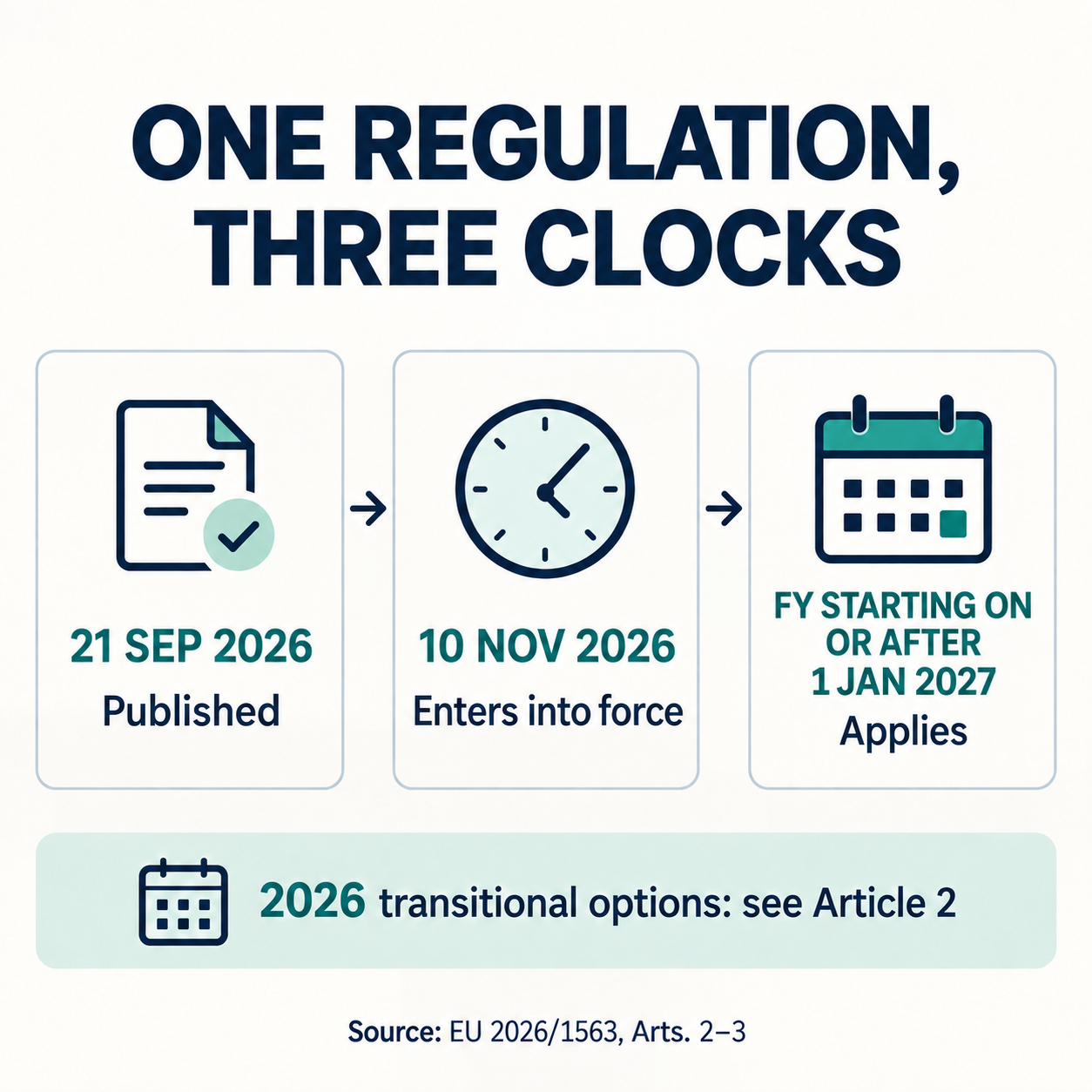
What do Articles 2 and 3 do? Article 2 is the bridge for financial years starting in 2026: it explains which standard versions or reliefs eligible reporting companies may choose. Article 3 is the timetable: it says when the regulation enters into force and which financial years it applies to.
One regulation, three milestones
21 September 2026 — publication. Commission Delegated Regulation (EU) 2026/1563 appeared in the Official Journal. This is the authoritative text to consult when planning.
10 November 2026 — entry into force. Article 3 sets this date. The regulation did not enter into force on its publication date.
Financial years beginning on or after 1 January 2027 — application. Article 3 sets this starting point. Whether a particular undertaking must report still depends on the wider reporting rules that apply to it.
What about financial years starting in 2026?
Article 2 sets out transitional options for undertakings within scope for financial years starting in 2026. It permits specified versions or reliefs and requires an undertaking using those options to state which version it applies in its sustainability statement. This is not a blanket instruction for every company: the exact conditions and company-specific reporting obligations matter.
Why the distinction matters
If a team treats the Official Journal publication date as the compliance start date, its reporting calendar and systems plan may be wrong. A useful planning record keeps four fields separate: publication, entry into force, applicable financial year, and any transitional choice.
Read the primary source: Commission Delegated Regulation (EU) 2026/1563, especially Articles 2–3.
This explainer is for learning and planning, not company-specific legal advice.